

The short answer: during menopause, focus on calcium-rich foods, enough protein, and plenty of vegetables, beans and whole grains. Your bones and heart need more care after estrogen falls. No food has been proven to stop hot flashes, but a few simple swaps may help you feel better day to day.
You open the fridge and nothing sounds right. One article says cut carbs. Another says eat more soy. A third is selling you a powder. All you want is to know what to make for dinner.
So here’s what the main health sources agree on, and where they don’t.
Why food matters more now
Falling estrogen changes things you can’t feel. Cleveland Clinic says estrogen helps preserve bone, and that you can lose about 25% of your bone mass by age 60 after menopause. It also says heart disease risk rises after menopause. The NIH adds that your body absorbs and keeps less calcium after this point.
Food can’t reverse these changes on its own, but it’s one part of looking after your bones and heart that you control every day.
Calcium: the one to get right
The NIH recommends 1,000 mg of calcium a day for adults aged 19 to 50, and 1,200 mg for women aged 51 to 70. The British Dietetic Association (BDA) puts it in simple terms: two to three servings of calcium-rich foods a day. Advice differs a little. One Cleveland Clinic article suggests 1,200 to 1,500 mg, so ask your doctor if you have bone concerns.
| Food | Portion | Calcium |
|---|---|---|
| Firm tofu, calcium-set | ½ cup (126g) | 861 mg |
| Canned sardines with bones | 1 can (92g) | 351 mg |
| Low-fat milk, 1% | 1 cup (244g) | 305 mg |
| Unsweetened soy milk, fortified | 1 cup (243g) | 299 mg |
| Collard greens, cooked | 1 cup (190g) | 268 mg |
| Canned pink salmon, with bones | 3 oz (85g) | 241 mg |
| Cheddar cheese | 1 oz (28g) | 199 mg |
| Plain nonfat Greek yogurt | 6 oz (170g) | 189 mg |
Figures worked out from USDA FoodData Central. Added calcium varies by brand, so check labels on tofu and plant milks.
Vitamin D helps your body absorb calcium. The NIH recommends 15 mcg (600 IU) a day up to age 70, and notes that very few foods contain it naturally, so fortified foods supply most of it in the US diet. The BDA says women over 65 should consider a 10 mcg supplement all year round. Ask your doctor what makes sense for you.
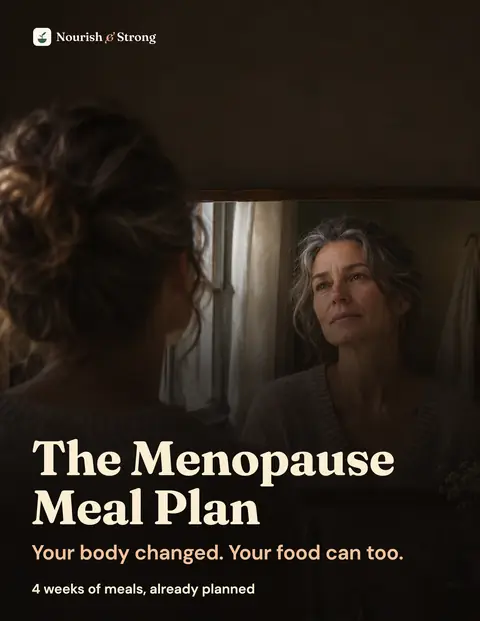
Going through menopause?
The Menopause Meal Plan
4 weeks of high-protein meals with grocery lists and prep plans. Only $12.
Protein: enough at each meal
Honest answer first: we couldn’t find an official protein target just for menopause, and the BDA guidance gives no number. General advice varies. Harvard gives a minimum of 0.8 grams per kilogram of body weight a day, while a summary of the 2025–2030 US Dietary Guidelines says to put protein first at every meal and aim for 1.2 to 1.6 grams per kilogram.
The reason to care is muscle. Cleveland Clinic says muscle loss speeds up with age, and that protein is part of treating it. The simple step is to include a good protein food at each meal. The BDA favors unsalted nuts, peas and beans. Cleveland Clinic also lists chicken, tuna, turkey, lean beef, tofu and lentils.
Morning is often where protein falls short. Our list of high protein breakfast ideas gives the real numbers, and why protein matters more than you think explains the rest.
Fill your plate with plants and fiber
The BDA advises at least five portions of fruit and vegetables a day, and more whole grains, beans, soy and pulses. It also suggests aiming for about 30 different plant foods a week, which may support gut bacteria linked to hormone levels. The word “may” matters there, but more plants also means more fiber.
Cleveland Clinic recommends a Mediterranean-style pattern as an easy all-in-one approach: lean proteins, whole grains and plant foods. It also suggests making half your plate leafy green vegetables. The British Nutrition Foundation adds small amounts of unsaturated fats, like olive or rapeseed oil.
For your heart, the BDA suggests getting your cholesterol checked every couple of years through your doctor or pharmacist. If a test shows high cholesterol, foods with added plant stanols or sterols, eaten at least once a day, may help.
Does soy help with hot flashes? Experts disagree
This is where the advice splits, so here it is plainly:
- The Menopause Society did not recommend soy products for hot flashes in its 2023 statement.
- Cleveland Clinic says soy from food may ease hot flashes and night sweats in some women, and prefers food over supplements.
- The BDA suggests eating plant estrogens daily for at least two to three months to see whether they help you.
- Memorial Sloan Kettering Cancer Center calls the studies mixed.
Our reading: soy isn’t a proven treatment, but tofu, soy milk and edamame are good sources of protein anyway. If you like them, they’re a reasonable thing to try. Talk to your doctor before taking soy supplements, especially if you have had breast cancer. Memorial Sloan Kettering warns that they can interact with medicines such as tamoxifen and aromatase inhibitors.
What to limit, if it bothers you
The NHS suggests limiting spicy food, caffeine and hot drinks, and staying within recommended alcohol limits. The BDA names the same triggers. These can make hot flashes and night sweats worse for some women, and not for others.
Here’s the catch: The Menopause Society didn’t recommend dietary changes or avoiding triggers as a treatment for hot flashes. So keep a short note for two weeks. If coffee clearly sets you off, cut back. If it doesn’t, enjoy your coffee.
If hot flashes are severe, food alone may not be enough. Our guide to perimenopause symptoms covers the treatment options to discuss with your doctor.
Do you need supplements?
The British Nutrition Foundation says no supplement gives you the same benefits as a healthy, balanced diet. Still, supplements can fill a real gap if you can’t get enough calcium or vitamin D from food. Three things to know first:
- Take calcium in small doses. The NIH says it’s absorbed best at 500 mg or less at a time.
- Don’t overdo it. The NIH sets the upper limit at 2,000 mg a day from all sources from age 51.
- Check your medicines. The NIH says calcium can interfere with some, including thyroid medicine and certain antibiotics.
The NHS says herbal remedies such as red clover and black cohosh have very little evidence of benefit or safety. Check with your doctor before taking them.
Your next step
Food works best alongside movement. The NHS recommends weight-bearing activity and strength training to help protect your bones, and our guide on how to keep muscle as you age makes a simple start. For today, look at your next meal. Does it have a protein, a calcium-rich food and a vegetable? If one is missing, add it.
Want every meal decided?
The Menopause Meal Plan
4 weeks of high-protein meals with grocery lists and prep plans, so you can stop guessing what to eat. Only $12.
Quick questions
What is the best diet for menopause?
There’s no single proven menopause diet. Cleveland Clinic suggests a Mediterranean-style pattern built on lean proteins, whole grains and plant foods, and the British Dietetic Association advises plenty of fruit, vegetables, wholegrains, beans and calcium-rich foods.
How much calcium do I need during menopause?
The NIH lists 1,000 mg a day for adults aged 19 to 50 and 1,200 mg a day for women aged 51 to 70. The upper limit from all sources is 2,500 mg up to age 50 and 2,000 mg from age 51.
Does soy help with hot flashes?
The evidence is mixed. The Menopause Society did not recommend soy products for hot flashes in 2023. Cleveland Clinic says soy foods may help some women, and the British Dietetic Association suggests trying plant estrogens daily for two to three months to see.
What foods should I limit during menopause?
The NHS suggests limiting spicy food, caffeine and hot drinks, and staying within recommended alcohol limits, as these can make hot flashes and night sweats worse for some women.
Should I take supplements during menopause?
Food comes first, but a supplement may help if you can’t get enough calcium or vitamin D. Check with your doctor or pharmacist first, especially if you take regular medicines, because supplements can interact with them.
This article is general information, not medical advice. If you’re worried about your bones, heart or symptoms, please talk to your doctor or a dietitian.
Sources
- NIH Office of Dietary Supplements. Calcium fact sheet for consumers and Vitamin D fact sheet for consumers.
- British Dietetic Association. Menopause and diet and Addressing sarcopenia.
- British Nutrition Foundation. Menopause.
- NHS. Things you can do for menopause and perimenopause and Treatment.
- Cleveland Clinic. Menopause, Sarcopenia and The Menopause Diet.
- The North American Menopause Society, now The Menopause Society. 2023 Nonhormone Therapy Position Statement release.
- Memorial Sloan Kettering Cancer Center. Soy.
- Harvard T.H. Chan School of Public Health, The Nutrition Source. Protein.
- American Family Physician. Dietary Guidelines for 2025–2030: Recommendations From the USDA and HHS.
- USDA FoodData Central. Firm tofu, sardines, 1% milk, soy milk, collard greens, pink salmon, cheddar and Greek yogurt.