

The short answer: the best high protein vegetarian meals combine two protein foods, such as tofu with edamame, lentils with Parmesan or eggs with white beans. Cottage cheese, firm tofu, Greek yogurt, tempeh, edamame and lentils each give 17 to 24 grams per portion, by USDA data. The 10 meals below give 23 to 36 grams per serving, with no meat or fish.
These recipes are lacto-ovo vegetarian, so they include eggs and dairy. Numbers are our USDA calculations for the amounts listed.
What vegetarian food has the most protein?
Cottage cheese and firm tofu have the most protein of the everyday vegetarian foods, at about 22 to 24 grams per portion. Greek yogurt, edamame, lentils and tempeh follow closely.
| Food and portion | Protein | Fiber | Calories |
|---|---|---|---|
| 1 cup 2% cottage cheese | 23.6g | 0g | 183 |
| ½ cup firm tofu (calcium sulfate) | 21.8g | 2.9g | 181 |
| 1 cup cooked shelled edamame | 18.5g | 8.1g | 188 |
| 1 cup cooked lentils | 17.9g | 15.6g | 230 |
| 6 oz plain nonfat Greek yogurt | 17.3g | 0g | 100 |
| 3 oz tempeh | 17.2g | not listed | 163 |
| 1 cup cooked black beans | 15.2g | 15.0g | 227 |
| 1 cup cooked chickpeas | 14.5g | 12.5g | 269 |
| 2 large eggs | 12.6g | 0g | 143 |
| 3 tbsp hulled hemp seeds | 9.5g | 1.2g | 166 |
| 1 cup cooked quinoa | 8.1g | 5.2g | 222 |
Source: our calculations from USDA FoodData Central. Tofu varies by brand, so check the label.
How do vegetarians get enough protein?
Vegetarians get enough protein by putting a protein food at every meal, which is what MedlinePlus advises. It says that if you eat eggs and dairy, protein won’t be a concern for most people. Aim for the 25 to 35 grams in our guide to how much protein per meal. Beans alone rarely get there, so pair them with a second source.
What are high protein vegetarian breakfast ideas?
The best high protein vegetarian breakfasts use tofu, eggs or cottage cheese.
1. Tofu scramble on toast. Serves 2 · 31g protein · 8g fiber · 397 calories per serving. You need: 9 oz firm tofu; 2 cups baby spinach; ½ red bell pepper, diced; 4 slices whole-wheat bread; 2 tsp oil; turmeric, garlic powder, salt and pepper. Crumble the tofu into a hot oiled pan with the pepper and spices, cook 5 minutes, then wilt in the spinach.
2. White bean shakshuka with feta. Serves 2 · 29g protein · 12g fiber · 486 calories. You need: 4 large eggs; 1 cup (179g) canned white beans, drained and rinsed; one 14-oz can crushed tomatoes; 1 onion and 1 red bell pepper, sliced; ¼ cup (38g) crumbled feta; 1 tbsp olive oil; 2 garlic cloves; cumin and paprika. Soften the onion and pepper, add the rest except eggs and feta, and simmer 10 minutes. Crack in the eggs, cover and cook until the yolks and whites are firm, as the FDA advises. Top with feta.
3. Cottage cheese berry bowl. Serves 1 · 31g protein · 5g fiber · 365 calories. You need: 1 cup (226g) 2% cottage cheese; 1 cup frozen blueberries, thawed overnight; 2 tbsp (20g) hulled hemp seeds. Stir and eat.
What are high protein vegetarian lunch ideas?
Good high protein vegetarian lunches are bowls and salads built on edamame, tempeh or tofu.
4. Edamame, white bean and feta salad. Serves 4 · 24g protein · 11g fiber · 408 calories. You need: 3 cups (354g) frozen shelled edamame, cooked and cooled; 2 cups (358g) canned white beans, drained and rinsed; ⅔ cup (100g) crumbled feta; 1 large cucumber and 2 cups cherry tomatoes, chopped; ½ red onion; 3 tbsp olive oil; 3 tbsp lemon juice. Toss and keep cold.
5. Tempeh taco bowls. Serves 4 · 30g protein · 7g fiber or more · 456 calories. You need: 12 oz tempeh; 1 cup (172g) canned black beans, drained; 1 cup frozen corn; ¾ cup (140g) dry brown rice; 1 cup (259g) salsa; 6 oz plain nonfat Greek yogurt; 1 tbsp oil; cumin and chili powder. Crumble and brown the tempeh with the spices, add the beans and corn, and serve over rice with salsa and yogurt. USDA lists no fiber for tempeh, so the real figure is higher.
6. Peanut tofu noodles with edamame. Serves 4 · 36g protein · 12g fiber · 517 calories. You need: one 14-oz block firm tofu, cubed; 6 oz whole-wheat spaghetti; 2 cups (236g) frozen shelled edamame; 1 head broccoli, in florets; ¼ cup (64g) peanut butter; 3 tbsp low-sodium soy sauce; 2 tbsp lime or lemon juice; 1 tbsp oil. Pan-fry the tofu until golden. Boil the pasta, adding edamame and broccoli for the last 3 minutes. Whisk the peanut butter, soy sauce and citrus with a splash of pasta water and toss.
What are high protein vegetarian dinners?
High protein vegetarian dinners lean on lentils, chickpeas and cheese.
7. Lentil bolognese. Serves 4 · 26g protein · 13g fiber · 533 calories. You need: 1 cup (192g) dry brown or green lentils; 2 cups (528g) marinara sauce; 1 onion; 3 garlic cloves; 1 tbsp olive oil; 8 oz dry whole-wheat spaghetti; ½ cup (50g) grated Parmesan. Simmer the lentils in water for 20 to 25 minutes, drain, and stir into the softened onion, garlic and sauce. Serve over pasta with Parmesan.
8. Chickpea masala with yogurt raita. Serves 4 · 24g protein · 13g fiber · 480 calories. You need: 3 cups (492g) cooked or canned chickpeas, drained; one 14.5-oz can diced tomatoes; 1 onion; 3 garlic cloves; 2 tbsp oil; garam masala, cumin and ginger; ¾ cup (140g) dry brown rice; 12 oz plain nonfat Greek yogurt and ½ cucumber for the raita. Cook the onion, garlic and spices, add tomatoes and chickpeas, and simmer 15 minutes. Grate the cucumber into the yogurt for raita.
9. Spinach baked ziti with cottage cheese. Serves 6 · 31g protein · 5g fiber · 532 calories. You need: 1 lb dry ziti; 2 cups (452g) 2% cottage cheese; 1½ cups (170g) shredded part-skim mozzarella; ½ cup (50g) grated Parmesan; 3 cups (792g) marinara; 5 oz baby spinach; 1 large egg. Undercook the pasta by 2 minutes. Mix the cottage cheese, egg, spinach and Parmesan, layer with pasta and sauce, top with mozzarella and bake at 375°F for 25 minutes.
10. Lentil and quinoa stuffed peppers. Serves 4 · 25g protein · 15g fiber · 431 calories. You need: 4 large bell peppers; 2 cups (396g) cooked lentils; ½ cup (85g) dry quinoa, cooked; one 14-oz can crushed tomatoes; ½ cup (75g) feta; 1 cup (113g) shredded part-skim mozzarella; 1 onion; 1 tbsp oil. Mix the lentils, quinoa, softened onion, feta and half the tomatoes. Fill the halved peppers, add the rest of the tomatoes, top with mozzarella and bake at 375°F for 35 minutes.
To batch these, use our high protein meal prep plan. Our high protein soups freeze well too.
Is tofu a complete protein?
Yes, tofu is a complete protein, and so are tempeh and edamame, because they’re all made from soy. Harvard’s Nutrition Source says soy protein contains all nine essential amino acids, the ones your body can’t make. Eggs and dairy are complete too. Many other plant foods lack one or more, though Harvard names quinoa and chia seeds as complete.
MedlinePlus says you don’t need to combine protein foods at the same meal, and Harvard suggests a variety of protein-rich plant foods each day. Our guide to the best beans for protein explains beans and rice in depth.
How do vegetarians get B12 and iron?
Vegetarians get B12 from eggs, milk, cheese, yogurt and fortified foods, and iron from beans, lentils, tofu, dark greens and fortified cereals. B12 is found naturally only in animal foods, the NHS says, but if you regularly eat eggs or dairy you probably get enough. Adults need 2.4 micrograms a day, according to MedlinePlus. Fortified cereals and plant milks also help. Our list of foods high in B12 has the amounts.
Iron needs more planning. The NHS says vegetarians are more likely to have lower iron stores, because iron from plants is harder to absorb. Eat vitamin C with it: MedlinePlus names citrus, strawberries, tomatoes, bell peppers and potatoes. It also says black tea can block iron, so drink it between meals. See our foods high in iron for the best plant sources, and talk to your doctor if you notice iron deficiency symptoms.
What does a high protein vegetarian meal plan look like?
A high protein vegetarian meal plan puts 20 to 30 grams at each meal and adds a protein snack. This sample day reaches about 97 grams:
| Meal | What you eat | Protein | Fiber | Calories |
|---|---|---|---|---|
| Breakfast | Cottage cheese berry bowl | 31g | 5g | 365 |
| Lunch | Edamame, white bean and feta salad | 24g | 11g | 408 |
| Snack | 6 oz plain nonfat Greek yogurt | 17g | 0g | 100 |
| Dinner | Lentil bolognese | 26g | 13g | 533 |
| Total | 97g | 29g | 1,406 |
It also gives about 14 mg of iron and 2.9 micrograms of B12, by our USDA count. Add fruit, nuts or bread to match your appetite.
Your next step
Cook one breakfast and one dinner from the list this week. For whole weeks planned for you, our guide to what to eat during menopause pairs well with four weeks of high-protein meals.
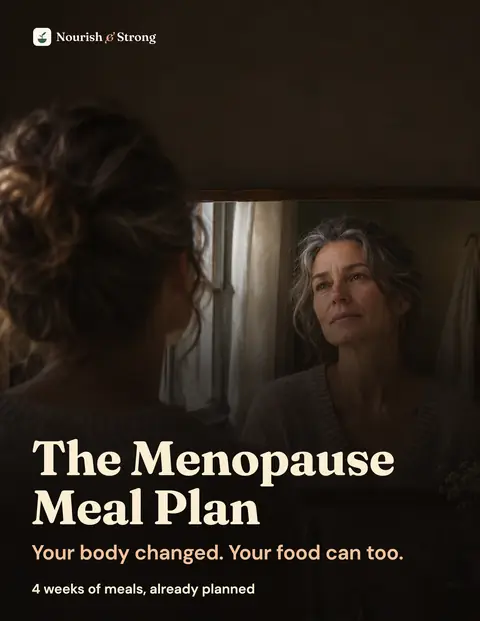
More protein, less guessing
The Menopause Meal Plan
4 weeks of high-protein meals with grocery lists and prep plans, so you can stop guessing what to eat. Only $12.
Quick questions
Is tempeh a complete protein?
Yes. Tempeh is made from fermented soybeans, and Harvard’s Nutrition Source says soy protein is a complete protein, containing all nine essential amino acids your body can’t make. Three ounces of tempeh gives about 17 grams of protein in USDA data, which makes it one of the richest vegetarian protein foods.
Can vegetarians eat eggs?
Many vegetarians eat eggs. MedlinePlus describes a lacto-ovo vegetarian diet as plant foods plus dairy and eggs, while a lacto-vegetarian diet adds dairy but not eggs, and a vegan diet has no animal products. Two large eggs give 12.6 grams of protein, according to USDA data.
How do you get protein as a vegetarian without soy?
Without soy, build meals on cottage cheese, Greek yogurt, eggs, lentils, beans and chickpeas. A cup of 2% cottage cheese has 23.6 grams of protein and a cup of cooked lentils has 17.9 grams, by USDA data. Pair a bean or lentil with dairy or eggs to reach 25 grams at a meal.
Is tofu high in protein?
Yes, tofu is high in protein, but the amount varies by brand. USDA lists firm tofu made with calcium sulfate at 21.8 grams per half cup, while a firm tofu made with nigari has about 9 grams per 100 grams. Check the Nutrition Facts label on the block you buy.
Do vegetarians need B12 supplements?
Not always. The NHS says B12 is found naturally only in animal products, and that if you regularly eat eggs or dairy you probably get enough. If you eat only small amounts or none, you need a reliable source such as fortified cereals, fortified plant drinks or a supplement. Ask your doctor what suits you.
Do vegetarians need iron supplements?
Not automatically. The NHS says vegetarians are more likely to have lower iron stores, because plant iron is harder to absorb, but many get enough from beans, lentils, tofu, greens and fortified cereals. Eat them with vitamin C foods, such as tomatoes, peppers or citrus. Talk to your doctor before you start taking iron.
This article is general information, not medical advice. Nutrition figures are estimates from USDA data and vary with brands. If you’re pregnant, have kidney disease, a food allergy or a condition such as anemia, ask your doctor or a registered dietitian how to plan a vegetarian diet that suits you.
Sources
- USDA. FoodData Central (SR Legacy)
- Harvard T.H. Chan School of Public Health. The Nutrition Source: Protein
- Harvard T.H. Chan School of Public Health. The Nutrition Source: Straight Talk About Soy
- MedlinePlus. Vegetarian diet
- MedlinePlus. Vitamin B12
- MedlinePlus. Iron in diet
- NHS. The vegetarian diet
- FDA. Safe Food Handling