

The short answer: eat less salt, eat more vegetables, fruit and whole grains, move most days, drink less alcohol, stop smoking, and lose weight if you’re overweight. Each habit may lower your numbers by a few points on average. If you take blood pressure medicine, keep taking it. Never stop or change it without your doctor.
Maybe it happened at a pharmacy, or at a routine checkup. The cuff tightened, the numbers came up, and someone said, “That’s a little high.” But you feel fine. So what are you supposed to do now?
Feeling fine is normal. The NHS says high blood pressure usually has no symptoms, which is why so many people don’t know they have it. Much of what helps happens in your kitchen and on your daily walk.
Know your numbers first
A reading has two numbers. The top one is systolic, and the bottom one is diastolic. Here are the US categories, as listed by Cleveland Clinic:
| Category | Top number | Bottom number |
|---|---|---|
| Normal | Below 120 | Below 80 |
| Elevated | 120–129 and | Below 80 |
| Stage 1 hypertension | 130s or | 80s |
| Stage 2 hypertension | 140 or higher, or | 90 or higher |
| Severe | 180 or higher, or | 120 or higher |
Experts don’t all draw the line in the same place. The WHO and the NHS call 140/90 or above high, and the NHS uses 135/85 or above for home readings. Your doctor will tell you what your own target should be.
What each habit may do
This table comes from a 2017 review of trials in Archives of Medical Science. The numbers show the average drop in the top and bottom numbers. They are not promises. Results vary from person to person, and you can’t simply add them together.
| Habit | Average drop (mm Hg) |
|---|---|
| DASH eating plan | 5.5 / 3.0 |
| Less sodium, in people with high blood pressure | 5.4 / 2.8 |
| Weight loss, averaging 5.1 kg (about 11 lb) | 4.4 / 3.6 |
| Aerobic exercise | 3.8 / 2.6 |
| More potassium in the diet | 3.5 / 2.0 |
| Less alcohol | 3.3 / 2.0 |
Combining habits can go further. In one trial in the same review, DASH with low sodium lowered the top number by 11.5 in people with high blood pressure.
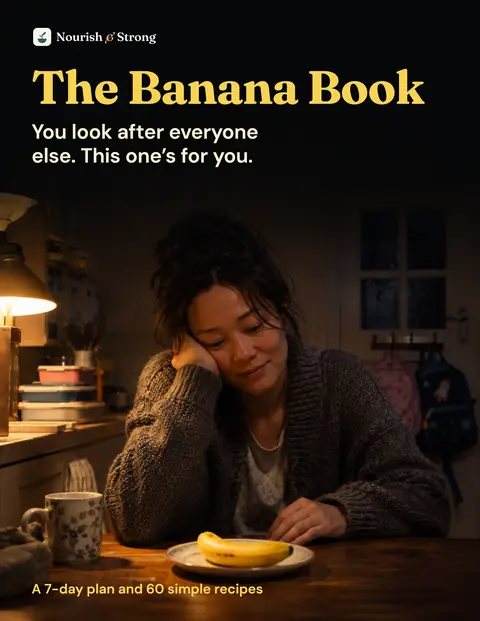
One small habit that stays easy
The Banana Book
A 7-day banana habit plan plus 60 simple recipes, to help you get more fruit into your week without it getting boring. Only $4.99.
Cut salt where it’s hiding
The CDC’s limit is less than 2,300 mg of sodium a day. That’s about one teaspoon of table salt, which holds around 2,400 mg. Americans average more than 3,300 mg.
The salt shaker isn’t the main problem. The CDC says most sodium comes from processed and restaurant foods. Common sources include deli meat sandwiches, pizza, soups, savory snacks, pasta dishes, bread and cheese.
Try this: compare labels on the bread, soup and sauces you buy most, and choose the lowest-sodium one you enjoy.
Eat the DASH way
DASH stands for Dietary Approaches to Stop Hypertension. The US National Heart, Lung, and Blood Institute calls it a flexible plan, and you don’t need special foods. It means more vegetables, fruit, whole grains, low-fat dairy, fish, poultry, beans and nuts. It means less fatty meat, full-fat dairy, sweets and sugary drinks. The plan limits sodium to 2,300 mg a day, and says 1,500 mg lowers blood pressure further.
On 2,000 calories a day, that includes 4–5 servings each of vegetables and fruit.
Get more potassium from food
Cleveland Clinic explains that potassium helps your kidneys get rid of extra sodium, and eases tension in your blood vessel walls. Good sources include beans, leafy greens, potatoes, yogurt and fruit. See our full comparison of foods high in potassium.
Bananas help, but they aren’t a shortcut. Cleveland Clinic points out that relying on bananas alone isn’t practical. For an honest look, read what happens when you eat a banana every day.
Be careful if this applies to you. People with kidney disease, or who take certain blood pressure medicines, should check with their doctor before eating much more potassium. Cleveland Clinic names ACE inhibitors, ARBs and aldosterone antagonists, which already help your body hold on to potassium. Too much can cause severe muscle weakness and heart rhythm problems. Ask before using a potassium salt substitute or a supplement too.
Move most days
The CDC, the NHS and the WHO all point to at least 150 minutes of moderate activity a week. That’s fast walking, 30 minutes on five days. The CDC says 75 minutes of intense activity, such as running, also counts. The WHO adds strength exercises on 2 or more days a week and says to sit less.
If 150 minutes feels far away, start with a walk you can keep up. If you have a heart condition or very high readings, ask your doctor what’s right for you.
Alcohol, smoking, sleep and stress
- Alcohol: the CDC says no more than 2 drinks a day for men and 1 for women. The NHS says 14 units a week or less.
- Smoking: the NHS, the CDC and the WHO all say to stop. Ask your doctor or pharmacist about help to quit.
- Caffeine: the NHS suggests cutting back on coffee, tea and cola.
- Sleep and stress: the CDC lists both, but gives no target. Regular hours and a daily walk are a good start.
If you take medication
Don’t stop or change your medication without talking to your doctor. That holds even if your numbers improve or you feel well. Cleveland Clinic warns that stopping on your own can lead to a hypertensive emergency.
Tell your doctor about everything you take, including over-the-counter medicines. Cleveland Clinic says some can raise blood pressure, including anti-inflammatory painkillers (NSAIDs). If your numbers improve, your doctor can review your treatment.
Check it properly at home
If your doctor asks you to monitor at home, the NHS advises two readings a minute apart, usually morning and evening, for the number of days they tell you. Sit down, rest your arm on a table, and relax. Write both numbers down and take the record to your appointment.
Urgent warning signs
Call emergency services right away if:
- Your top number is 180 or higher, or your bottom number is 120 or higher, and you have symptoms such as chest pain, dizziness, a severe headache, confusion, trouble breathing or vision changes
- You have signs of a stroke: a drooping face, slurred speech, or sudden weakness in an arm or leg
- You have sudden, lasting chest pain, or pain that spreads to your arms, neck, jaw, stomach or back, or chest pain with sweating, nausea or breathlessness
These can be signs of a hypertensive emergency, a stroke or a heart attack. Don’t drive yourself.
If your top number is 180 or higher, or your bottom number is 120 or higher, with no symptoms, Cleveland Clinic says to rest for several minutes and measure again. If it stays high, seek medical care. If it comes down, call your doctor and tell them what happened.
Get same-day advice if you often have headaches or blurred vision, or chest pain that comes and goes. The NHS lists these as signs high blood pressure needs checking quickly.
Your next step
Choose one change for this week. Swap one salty food you buy often, or add a 15-minute walk after dinner. Then, if you don’t know your numbers, get them checked. It’s the only way to know, the WHO says.
Make the fruit part easy
The Banana Book
A 7-day banana habit plan plus 60 simple recipes, sorted by what you need. It’s a cookbook, not a treatment, so keep following your doctor’s advice. Only $4.99.
Quick questions
Can I lower my blood pressure without medication?
Sometimes everyday habits are enough, and they help alongside medicine too. But the NHS says a doctor will usually prescribe medicine if your blood pressure is very high, if you’re at higher risk of heart attack or stroke, or if it stays high despite changes. Never stop or change medication without your doctor.
Do bananas lower blood pressure?
No single food does. Eating more potassium from a range of foods can help as part of a healthy diet, and a banana is one easy source. People with kidney disease, or on certain blood pressure medicines, should check with their doctor before eating much more potassium.
What is a dangerous blood pressure level?
Cleveland Clinic says a top number of 180 or higher, or a bottom number of 120 or higher, with symptoms such as chest pain, dizziness or vision changes needs emergency help. Call emergency services. If you have no symptoms, rest for several minutes and measure again. If it stays high, seek medical care.
Are salt substitutes safe?
Not for everyone. Many are made with potassium. The Harvard Nutrition Source says they can be dangerous for people who have trouble clearing potassium, or who take medicines that raise it. Check with your doctor first.
This article is general information, not medical advice. Please talk to your doctor about your blood pressure and before changing any medication.
Sources
- NHS. High blood pressure and Blood pressure test.
- Cleveland Clinic. High Blood Pressure (Hypertension), Hypertensive Crisis and How Potassium Helps Lower Your Blood Pressure.
- World Health Organization. Hypertension.
- CDC. Preventing High Blood Pressure and About Sodium and Health.
- National Heart, Lung, and Blood Institute. DASH Eating Plan.
- Aronow WS. Lifestyle measures for treating hypertension. Archives of Medical Science. 2017.
- Harvard T.H. Chan School of Public Health, The Nutrition Source. Potassium.