

The short answer: there’s no proven way to switch a hot flash off, but you can cool down fast. Take off a layer, use a fan, sip a cold drink or hold a cool compress to your skin. A typical hot flash lasts one to five minutes. For fewer hot flashes over time, CBT and prescription treatments have the strongest evidence, while soy, black cohosh and breathing exercises have little.
Hot flashes are common. Cleveland Clinic says as many as 3 in 4 people report them in the years before menopause, and up to 1 in 3 have more than 10 a day.
How do you stop a hot flash fast?
The fastest way to get through a hot flash is to cool your body straight away. None of the guidance we read offers a way to end one instantly, but these steps from the NHS and Cleveland Clinic make it easier to ride out:
- Shed a layer. Dress in layers you can remove the moment the heat starts.
- Move air. Use a fan or turn on the air conditioning.
- Drink something cold. Keep a cold drink nearby and skip hot ones.
- Use a cool compress on your face, neck or wrists.
- Take a cool shower if you’re at home.
Be honest with yourself about what these do. In its 2023 review, The Menopause Society did not recommend cooling techniques as a treatment, because the evidence that they cut the number of hot flashes is limited. They’re still free and safe, and they can make the minutes more bearable.
Why do hot flashes happen?
Hot flashes happen because falling estrogen disrupts the way your body controls its temperature. Cleveland Clinic says experts know hormonal changes are the cause, though the exact reason isn’t fully clear. The NHS describes the feeling as your face, neck and chest suddenly feeling very hot, sometimes with heavy sweating, palpitations, anxiety or dizziness. At night they’re called night sweats.
Hot flashes can start as soon as periods become irregular. The Office on Women’s Health says hot flashes and night sweats last 7 to 12 years on average. Not sure which stage you’re in? Read perimenopause vs menopause.
What triggers hot flashes?
Common hot flash triggers include heat, alcohol, caffeine, spicy food and stress. Cleveland Clinic lists:
- Hot weather, warm rooms and heavy clothing
- Getting overheated during exercise
- Alcohol and caffeinated drinks
- Hot drinks such as coffee, tea or hot chocolate
- Spicy food
- Stress
- Hot showers or baths
- Smoking
Triggers differ from person to person. For two weeks, jot down the time of each hot flash and what you’d just eaten, drunk or done. If a pattern shows up, avoid that trigger. The Menopause Society says avoiding triggers isn’t proven as a treatment, but if one clearly sets you off, cutting it costs little.
Do natural remedies for hot flashes work?
Most natural remedies for hot flashes have weak or no evidence. Here is what the research says about the popular ones.
| Remedy | What the evidence shows | Verdict |
|---|---|---|
| Soy foods and supplements | A Cochrane review of 43 trials with 4,364 women found no conclusive evidence that phytoestrogen supplements reduce hot flashes. Placebo alone cut them by 1% to 59%. | Not recommended by The Menopause Society |
| Black cohosh | A Cochrane review of 16 trials with 2,027 women found no difference from placebo in how often hot flashes happened. A 2023 review cited by NIH found possible benefit. Rare cases of liver damage have been reported. | Not recommended; evidence mixed |
| Cooling (fans, layers, cold drinks) | Limited evidence it reduces hot flashes, but it eases the moment | Safe comfort measure |
| Paced breathing | Good, consistent evidence that it doesn’t reduce hot flashes | Not recommended as a treatment |
| Cognitive behavioral therapy (CBT) | Good, consistent evidence that it helps; the NHS offers it for hot flashes | Recommended |
| Clinical hypnosis | Good, consistent evidence that it helps | Recommended |
| Exercise and yoga | Limited evidence for hot flashes specifically | Not recommended as a treatment, but good for bones, mood and sleep |
| Acupuncture | Limited or inconsistent evidence | Not recommended |
Verdicts are from The Menopause Society’s 2023 position statement on non-hormone treatment. Cleveland Clinic adds evening primrose oil and vitamin E to the list most experts don’t recommend. The NHS says remedies such as black cohosh and red clover have very little evidence on how well they work or how safe they are, and some can cause serious side effects with other medicines. Talk to your doctor before trying any supplement.
What helps hot flashes over weeks?
Over weeks, the habits that help most are a cool setup, no smoking, less alcohol and a talking therapy called CBT. The NHS and Cleveland Clinic suggest:
- Keep your bedroom cool and use light sheets instead of heavy blankets.
- Don’t smoke. The NHS says smoking can make menopause symptoms worse.
- Keep alcohol within the recommended limit. It may affect your symptoms.
- Move most days. Cleveland Clinic suggests at least 20 minutes of exercise most days, ideally somewhere cool. Our guide to keeping muscle adds strength work for your bones.
- Ask about CBT. The NHS says CBT can help manage hot flashes, and it can also help low mood, anxiety and sleep problems.
Some people eat more plant estrogens from soybeans, chickpeas, lentils and flaxseed. Cleveland Clinic says these foods are generally safe but asks you to talk to your doctor first, especially if you’ve had breast cancer. Our guide on what to eat during menopause shows how to build them into meals that also protect your bones.
What treatments can a doctor offer for hot flashes?
The most effective treatment for hot flashes is hormone therapy, and several non-hormonal medicines help too. The Menopause Society calls hormone therapy the most effective treatment. Whether any option suits you depends on your health history, so these are options to discuss with your doctor:
- Hormone therapy (HRT). Estrogen, given as tablets, patches, spray or gel. The NHS says you’ll usually also need a progestogen if you still have your womb.
- Non-hormonal medicines. Cleveland Clinic lists some antidepressants (SSRIs and SNRIs), gabapentin and oxybutynin. It says fezolinetant, elinzanetant and low-dose paroxetine are FDA-approved specifically for moderate to severe hot flashes.
- Clonidine. The NHS says a doctor may suggest clonidine or an antidepressant if CBT doesn’t help, though The Menopause Society does not recommend clonidine.
Don’t start, stop or change any medicine on your own. Your doctor will weigh the benefits and risks with you.
How do you stop hot flashes at night?
To calm hot flashes at night, keep your bedroom cool, sleep under light layers and keep a cold drink by the bed. Cleveland Clinic suggests a fan or air conditioning and light sheets. The NHS adds lightweight nightwear and regular sleep routines. If night sweats are wrecking your sleep, CBT can help with both, and a doctor can discuss medicine. If broken nights leave you drained all day, read why am I always tired.
When should you see a doctor about hot flashes?
See a doctor if hot flashes are interfering with your life. Cleveland Clinic and the NHS also advise getting checked if:
- You have hot flashes but don’t think you’re in perimenopause. Cleveland Clinic says thyroid problems, infections such as flu and some medicines can cause them.
- You have palpitations.
- You get any vaginal bleeding after 12 months without a period.
- Hot flashes get worse or more bothersome after menopause, so other causes can be ruled out.
Before you go, write down how many hot flashes you have a day, how long they last and what seems to set them off. Our perimenopause symptoms guide lists the other changes worth mentioning.
The Menopause Society doesn’t count diet changes as a proven hot flash treatment, but eating well supports your bones and heart through this stage. The Menopause Meal Plan gives you 4 weeks of high-protein meals with grocery lists and prep plans.
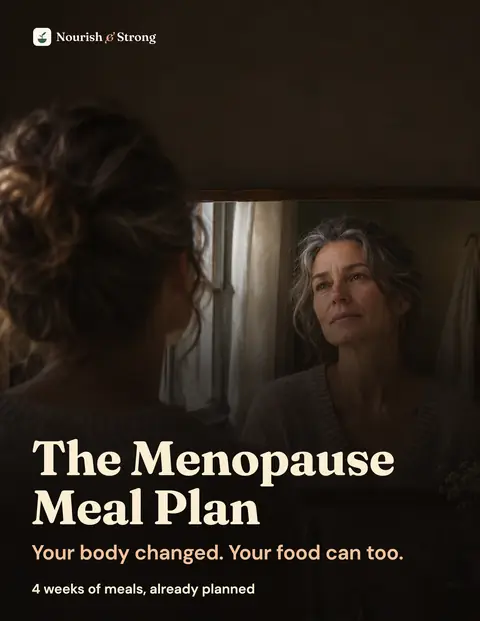
More protein, less guessing
The Menopause Meal Plan
4 weeks of high-protein meals with grocery lists and prep plans, so you can stop guessing what to eat. Only $12.
Quick questions
What stops hot flashes immediately?
No proven method stops a hot flash instantly, but cooling down fast helps it pass more comfortably. Take off a layer, use a fan, sip a cold drink or hold a cool compress to your skin. Cleveland Clinic says a typical hot flash lasts one to five minutes, so the worst is usually over quickly.
Do hot flashes ever go away?
Yes, for most people hot flashes fade with time, though it can take years. The Office on Women’s Health says hot flashes and night sweats last 7 to 12 years on average, and longer for some. Cleveland Clinic says they may become milder or go away completely after menopause, but some people still have them.
Why do hot flashes get worse at night?
Hot flashes at night, called night sweats, can feel worse because warm bedding and a warm room trap heat. Cleveland Clinic suggests a fan or air conditioning and light sheets instead of heavy blankets. The NHS says sleep problems can be worse if you have night sweats, and CBT can help with both.
Can hot flashes make you dizzy?
Yes. The NHS says hot flashes can make you feel dizzy, and can also cause heavy sweating, palpitations or anxiety. Dizziness has other causes too, so tell your doctor if it keeps happening, and mention any palpitations, which the NHS lists as a reason to see a doctor.
How can I stop hot flashes naturally?
Cooling down, avoiding your own triggers and trying CBT are the most practical natural steps. CBT and clinical hypnosis are the drug-free options The Menopause Society recommends. It does not recommend soy, black cohosh or other supplements, because the evidence is weak or mixed. Talk to your doctor before trying any herbal remedy.
What else can cause hot flashes besides menopause?
Cleveland Clinic says thyroid disorders are a common cause of hot flashes, and viral infections such as the flu and some medicines can cause them too. If you have hot flashes and don’t think you’re in perimenopause, see a healthcare provider so they can find out what’s behind them.
This article is general information, not medical advice. Don’t start, stop or change any medicine or supplement without talking to your doctor, and see a doctor if hot flashes disrupt your life or you have any bleeding after menopause.
Sources
- Cleveland Clinic. Hot Flashes
- NHS. Things you can do to help menopause and perimenopause symptoms
- NHS. Treatment for menopause and perimenopause
- NHS. Symptoms of menopause and perimenopause
- The North American Menopause Society. The 2023 nonhormone therapy position statement. Menopause, 2023
- Lethaby A, et al. Phytoestrogens for menopausal vasomotor symptoms. Cochrane Database of Systematic Reviews, 2013
- Leach MJ, Moore V. Black cohosh (Cimicifuga spp.) for menopausal symptoms. Cochrane Database of Systematic Reviews, 2012
- National Center for Complementary and Integrative Health (NIH). Black Cohosh
- Office on Women's Health, U.S. Department of Health and Human Services. Menopause basics
- Cleveland Clinic. Postmenopause